Showing posts with label 90 day read. Show all posts

Tuesday, December 3, 2013

Some insight for reading the minor prophets of the Bible

Helpful hints from Laura Odom

Minor prophets begin day 64.....

The first time I read through the Bible in 90 Days, it was all I could do to get through the minor prophets. Other than Jonah, which pretty much everyone is familiar with (cue VeggieTale theme song), they’re some of the lesser known and understood books. Last year, I took a Bible class on the minor prophets, and I learned a few things that I thought might be beneficial to all of us who are reading through them again.

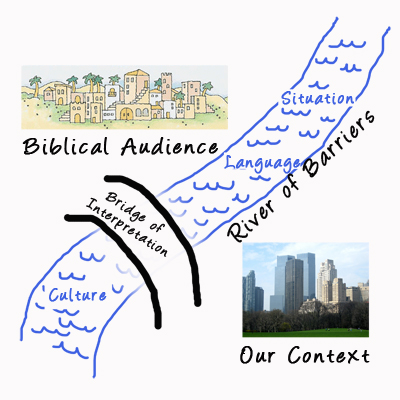
First, let me draw you a little picture. Bear in mind, I’m no great artist! Here is something we must deal with when studying the minor prophets:

Biblical Audience

The minor prophets were written to the nations of Israel and Judah. You can do in-depth studies that will help you pinpoint closer moments in the nation’s history, but here’s the important thing… There was a covenant between God and Israel. We read it in Deuteronomy 28. Basically, it said, if you obey me and keep my commandments, you will be blessed. If not, you will be cursed and your enemies will overtake you.

Throughout the minor prophets, we see the recurring theme that Israel/Judah has broken the covenant. There is a call to repentance, and when they do not repent, judgement comes. There is oftentimes a show of hope after judgement.

River of Barriers

The river of barriers are things that keep us from understanding the minor prophets. Theirs was a different culture. The language was different. It’s also hard for us to empathize with their situation, because we are so far removed from it. We are not necessarily facing direct physical invasion or destruction.

Bridge of Interpretation

So, how do we cross the bridge, and interpret the minor prophets?

As you read, look for the theological principle of each book — the eternal truth that transcends the individual situations mentioned. For example, warnings, repentance, future glory. These ideas are ideas we can still apply to our lives today. We can still glean from these books and grasp meanings that apply to our time. We can learn how sin affects our own relationship with the Father. We can learn to beware of religious ritualism. We can learn from the mistakes of the Israelites. We learn how we should treat the poor and afflicted.

We also have the benefit of having the New Testament. We know how the story ends! You will notice as you continue to read that some of these passages will be mentioned again in the New Testament. We have the benefit of seeing the whole picture and passages that help clarify the Old Testament and add to our understanding.

I hope that this way of reading will help you as we go forward through the minor prophets. I also thought I’d include a brief list of themes for each of the minor prophets. Maybe it will help you focus as you read through.
  • Obadiah – The Fall of Edom

  • Joel – The Day of the Lord, Locust and Pentecost
  • Jonah – The Mercy of a Sovereign God
  • Amos – The Lion has roared and Israel is judged
  • Hosea – God’s wife Israel spurns his love
  • Nahum – Fall of Nineveh; Poetic justice
  • Micah – Walk with mercy, justice & humility
  • Zephaniah – The Day of the Lord revisited
  • Habakkuk – From fear to faith
  • Haggai – Build the Temple!
  • Zechariah – Not by might but by my Spirit
  • Malachi – Remember the Law and wait for Elijah

May God bless each of you as you continue to read through His Word.

~ Laura Odom
Laura is a Christian wife, mother, daughter, photographer, amateur chef, homeschooler, pretend gardener, cancer-survivor and laundry-hater. She co-authors a blog which can be found at TrainsandTutus.com.

Sunday, October 27, 2013

Day 13, 14, & 15

Read the Bible in 90 days.....   
Day thirteen, fourteen, and fifteen
Day 13: Deuteronomy 1:1 - 7:26
Day 14: Deuteronomy 8:1 - 23:25
Day 15: Deuteronomy 24:1 - 34:12


Although modern criticisms maintain that Deuteronomy is of later origin than the previous four books, the unity of the Pentateuch is generally admitted. The fact is that Moses was its author is distinctly declared (31:19) and the NEW TESTAMENT expressly states that it is the work of Moses (Matt 19:7-8, Mark 10:2-9, Act 3:22, 7:37). The style is more emotional and oratorical than the other four books, and its tone is more spiritual and ethical; but this does not argue against the Mosaic authorship. These facts are due to the circumstances, occasion and purpose of the utterances recorded. The account of the death of Moses, of course, was added by another hand, but this doesn’t discredit the Mosaic authorship of the balance of the material.

The crisis facing Israel in the occupation of idolatrous and corrupted Canaan was quite certainly the occasion of these addresses of Moses. Supreme emphasis upon the inflexible and exacting nature of GOD’S Law constituted the purpose. The key to the whole series of instruction is found in Chapter 28 to 30:9

Moses’ farewell message is usually divided on the basis of three addresses, but, topically, seven divisions are better
1) Summary of Israel’s history in the wilderness (1-3)
2) A restatement of the Law with exhortations and warnings (4-11)
3) Sundry Laws and instructions with warnings and predictions (12-27)
4) Significant prophecies summarizing the history of Israel to the Second Advent of CHRIST Embracing the notable covenant (28-30)
5) Farewell counsels to Priests, Levites, and Joshua (31)
6) The song of Moses and the pronouncements of blessings on the Twelve Tribes (32-33)
7) Death of Moses

Sunday, October 6, 2013

Day 10, 11, & 12

Read the Bible in 90 days..... 
Day ten and day eleven summary.


Day 10 - Numbers 1:1 - Numbers 12:16
Day 11 - Numbers 13:1 - Numbers 24:25
Day 12 - Numbers 25:1 - Numbers 36:13

 Fourth Book of Pentateuch, written by Moses, takes its name from the enumeration of Israel at Sinai and at Moab.
 
The book of Numbers takes up the story of Israel’s journey from Egypt to the border of Canaan where they deflected at Kadesh Barnea and refused to enter the Land of Promise. It then continues with their wanderings in the wilderness for thirty-eight years under the judgement of GOD, until the entire nation twenty years old and older had died, with the exception of Joshua and Caleb, and a new generation grew up and was developed. While the book is a history of more than thirty-eight years, comparatively little is recorded of those weary, disciplinary wanderings; the greater portion of the record deals with the happenings of the last year. It brings Israel to Kadesh-Barnea for the second time, then to Moab east of the Jordan.

Numbers begins with a census- hence the book’s name. Fourteen months after the Israelites escape Egypt, they number 603,550 men, not including the Levites. The mass of people, the newly formed nation of Israel, begins a march of approximately two hundred miles to the “promised land” of Canaan- a journey that will take decades to complete. The delay is God’s punishment of the people, who complain about food and water, rebel against Moses, and hesitate to enter Canaan because of powerful people already living there. God decrees that this entire generation will die in the wilderness, leaving the Promised Land to a new generation of more obedient Israelites.


 (rdg2) 

Friday, October 4, 2013

Day 8 & 9

Read the Bible in 90 days.....
Day eight and day nine summary.


 Day 8 - Leviticus 1 - Leviticus 14 
 Day 9 - Leviticus 15 - Leviticus 27

Leviticus receives its name from the Septuagint (the pre-Christian Greek translation of the OT) and means "relating to the Levites." Its Hebrew title, wayyiqra', is the first word in the Hebrew text of the book and means "And he [i.e., the Lord] called." Although Leviticus does not deal only with the special duties of the Levites, it is so named because it concerns mainly the service of worship at the tabernacle, which was conducted by the priests who were the sons of Aaron, assisted by many from the rest of the tribe of Levi. Exodus gave the directions for building the tabernacle, and now Leviticus gives the laws and regulations for worship there, including instructions on ceremonial cleanness, moral laws, holy days, the sabbath year and the Year of Jubilee. These laws were given, at least for the most part, during the year that Israel camped at Mount Sinai, when God directed Moses in organizing Israel's worship, government and military forces. 


Throughout Leviticus, Israel remains encamped at Mount Sinai while God appears in the Tent of Meeting, dictating to Moses his specifications regarding the Jewish ceremonial laws. The laws are extremely detailed, outlining every aspect of how and when religious offerings are to be presented to God. God gives the instructions himself, and his voice comprises the majority of the text. A brief narrative interlude describes the anointing of Aaron and his sons as Israel’s priests. At the ceremony, God appears and engulfs the altar in a burst of flames, eliciting shouts of joy from the people. Soon after, God also sends fire to consume two of Aaron’s sons when they neglect to make the right preparations for approaching the altar.

God lists various types of forbidden sexual behavior and discusses foods and physical conditions that can make a person unclean. Uncleanliness can result from things such as bodily discharge or touching a dead carcass. An unclean person must leave the Israelite camp or undergo physical cleansing, waiting periods, and religious sacrifices. Typically, sexual sins are punishable by death, but God also instructs the Israelites to kill a man who blasphemes, or curses God’s name. Of all his restrictions, God places particular emphasis on the prohibition against eating meat with blood still in it: doing so will result in banishment, not only from Israel but from God’s graces as well.

In the end, God promises to give Israel great abundance and success if it obeys these laws. If Israel is disobedient, though, God will send destruction and famine and “abhor” the Israelites (26:30). But the laws in Leviticus also set aside an annual Day of Atonement during which the priest is to offer sacrifices for the forgiveness of the entire nation. As long as the Israelites confess and repent for their sins, God promises to keep his covenant and never leave them.


 (rdg2)

Wednesday, October 2, 2013

Day 5, 6, and 7


Read the Bible in 90 days.....
  Day five, six, and seven summary.
Day 5 - Exodus 1-15. 
Day 6 - Exodus 16-28.
Day 7 - Exodus 29-40.

The second book of the Bible is Exodus. Exodus is a very powerful story. It is about the rise of the Israelites and watching them become a nation of God's people.


While Genesis explains the origins of the world and of humanity, Exodus is the theological foundation of the Bible. Exodus explains the origins of Torah—the law of the Jewish people and the tradition surrounding that law. Torah is not merely a list of laws, but, rather, the notion of law as a way of life. Indeed, the law exists as a way of life for Moses and his people. Although portions of Exodus are devoted to legal matters, the declaration of law in Exodus always comes in the form of a story, relayed by discussions between God and Moses, and between Moses and the people.

source
The Book of Exodus begins more than four hundred years after Joseph, his brothers, and the Pharaoh he once served have died. The new leadership in Egypt—feeling threatened by Jacob’s descendants, who have increased greatly in size — embarks on a campaign to subdue the Israelites, forcing them into slavery and eventually decreeing that all Hebrew boys must be killed at birth in the Nile River. The Hebrew women resist the decree, and one woman opts to save her newborn son by setting him afloat on the river in a papyrus basket. Fortunately, Pharaoh’s daughter discovers the abandoned child and raises him after he has been nursed, naming him Moses. 


source
Moses is aware of his Hebrew roots, and, one day, he kills an Egyptian who is beating an Israelite worker. Moses flees in fear to Midian, a town near Sinai, where he meets a priest named Jethro and marries the man’s daughter, beginning a new life as a shepherd. God, however, is concerned for the suffering of the Israelites, and he appears to Moses in the form of a burning bush. God speaks to Moses, informing him of his plan to return the Israelites to Canaan—to “a land flowing with milk and honey” (3:8)—and to send Moses back to Egypt to accomplish this task. Moses is timid and resists, citing his lack of eloquence and abilities, and refuses to go. God is angered but encourages Moses, presenting him with a staff for performing miracles and instructing Moses to take his brother, Aaron, with him as an aid. When Moses asks God what his name is, God replies, “I AM WHO I AM” (3:14).
 

source
Moses and Aaron return to Egypt, where Moses organizes the Israelites and confronts the Pharaoh, demanding the release of the Hebrew people. Moses performs a miracle, turning his staff into a snake, but Pharaoh is unimpressed and only increases the workload for the Israelites. God responds by inflicting a series of ten plagues on Egypt. God turns the Nile River into blood, causes frogs to cover Egypt, turns all of the dust in Egypt to gnats, and causes swarms of flies to come into the houses of Pharaoh and his officials. God then strikes Egypt’s livestock with a disease, creates festering boils on humans and animals, and sends thunder, hail, and fire that destroy crops, livestock, and people. God sends swarms of locusts, and covers Egypt with “a darkness that can be felt” (10:21). Before each plague, Moses demands the Israelites’ release, and after each plague, God purposefully “hardens” Pharaoh so that he refuses the request (4:21, 7:22). The tenth and final plague kills all the firstborn males in Egypt. Before the plague, Moses instructs the Hebrew people to cover their door posts in the blood of a sacrificed lamb as a sign for God to protect their homes from his killings. Pharaoh relents and releases the more than 600,000 Israelites who, in turn, plunder the Egyptians’ wealth. Upon leaving, Moses enjoins the Israelites to commemorate this day forever by dedicating their firstborn children to God and by celebrating the festival of Passover, named for God’s protection from the final plague (12:14–43).

source
Guided by a pillar of cloud during the day and by fire during the night, Moses and the Israelites head west toward the sea. Pharaoh chases them. The Israelites complain that Moses has taken them to die in the wilderness, and Moses, at God’s bidding, parts the sea for the people to cross. Pharaoh follows and Moses closes the waters back again, drowning the Egyptian army. Witnessing the miracle, the people decide to trust Moses, and they sing a song extolling God as a great but loving warrior. Their optimism is brief, and the people soon begin to worry about the shortage of food and water. God responds by sending the people food from heaven, providing a daily supply of quail and a sweet bread-like substance called manna. The people are required only to obey God’s commandments to enjoy this food. Soon thereafter, the Israelites confront the warring Amalekite people, and God gives the Israelites the power to defeat them. During battle, whenever Moses raises his arms, the Israelites are able to rout their opponents.
 

source
Three months after the flight from Egypt, Moses and the Israelites arrive at Mount Sinai, where God appears before them, descending on the mountain in a cloud of thunder and lightning. Moses climbs the mountain, and God gives Moses two stone tablets with ten commandments inscribed on them regarding general, ethical behavior as well as an extended series of laws regarding worship, sacrifices, social justice, and personal property. God explains to Moses that if the people will obey these regulations, he will keep his covenant with Israel and will go with them to retrieve from the Canaanites the land promised to Abraham. Moses descends from the mountain and relates God’s commandments to the people. The people agree to obey, and Moses sprinkles the people with blood as a sign of the covenant. Moses ascends to the mountain again where God gives him more instructions, this time specifying in great detail how to build a portable temple called an ark in which God’s presence will dwell among the Israelites. God also emphasizes the importance of observing the Sabbath day of holy rest. 

source
Moses comes down from the mountain after forty days, only to find that Aaron and the Israelites have now erected an idol—a golden calf that they are worshipping in revelry, in direct defiance of the ten commandments. Moses breaks the stone tablets on which God has inscribed the new laws, and God plans to destroy the people. Moses intercedes on the Israelites’ behalf, begging God to relent and to remember his covenant. Pleased with Moses, God is appeased and continues to meet with Moses face to face, “as one speaks to a friend,” in a special tent set aside for worship (33:11). God reaffirms his covenant with Moses, and, fashioning new stone tablets to record his decrees, God declares himself to be a compassionate, loving, and patient God. At Moses’s direction, the Israelites renew their commitment to the covenant by erecting a tabernacle to God according to the exact specifications God has outlined.
source


 (rdg2)


Tuesday, October 1, 2013

Day 3 and 4


Read the Bible in 90 days.....
Day three and four summary.

Genesis 30: Rachel's maid, Bilhah, had sons for Jacob. Then Leah's maid, Zilpah, had sons. Leah had Jacob's fifth son. Finally Rachel had a son. Laban allowed Jacob flocks as wages to stay.

Genesis 31: The Lord told Jacob to return home. Jacob left in secret and Rachel took Laban's idols. Laban chased Jacob but they made a treaty.


Genesis 32: Jacob heard that Esau was coming to meet him. He was afraid and sent gifts. That night he wrestled with a man who renamed him Israel.

Genesis 33: Esau and his men arrived. Jacob bowed down but Esau ran to embrace him. Jacob came to Shalem, a city of Shechem, which is in the land of Canaan, when he came from Padanaram; and pitched his tent before the city. He bought a parcel of a field, where he had spread his tent, at the hand of the children of Hamor, Shechem's father, for an hundred pieces of money, and he erected there an altar, and called it EleloheIsrael.


Genesis 34: Shechem, the son of Hamor the Hivite, prince of the country, raped Jacob and Leah's daughter, Dinah, and then asked to marry her. Jacob's sons told Shechem to circumcise his men, then Simeon and Levi killed them.
 

Genesis 35: Jacob went to Bethel and God renamed him Israel. They journeyed on. Rachel died having Israel's twelfth son. Isaac died in Hebron.


Genesis 36: Esau's sons were Eliphaz, Reuel, Jeush, Jalam and Korah. Esau and his family moved away to Seir. They became the Edomites.
 

Genesis 37:  Joseph was Israel's favorite son. He had dreams and his brothers were jealous so they sold him. He was bought by Potiphar in Egypt.


Genesis 38: Judah's sons Er and Onan died, leaving Tamar a widow. Judah sent her away but she put on a veil and he slept with her. She had twins.


Genesis 39: Potiphar put Joseph in charge of his house. His wife tried to seduce Joseph, then lied about it, so Potiphar put Joseph in prison.


Genesis 40:  Pharaoh put his cupbearer and baker in prison. Joseph interpreted their dreams. The cupbearer was restored but the baker was hanged.


Genesis 41: Pharaoh had a dream and called for Joseph to interpret it. The dream predicted a famine. Pharaoh put Joseph in charge of all Egypt.

Genesis 42: Joseph's brothers went to Egypt to buy grain but didn't recognize him. He kept Simeon in prison and sent the rest to fetch Benjamin.


Genesis 43:  When the grain ran out, Joseph's brothers went back to Egypt with Benjamin. Joseph invited them to his house and gave them a feast.


Genesis 44: Joseph hid his cup in Benjamin's sack, then sent a steward after his brothers. Judah offered himself as a slave instead of Benjamin.

Genesis 45: Joseph told his brothers who he was. They were afraid, but he told them, "God sent me here." His brothers went to fetch their father.

Genesis 46: Israel set out with all his household. God told him not to be afraid. Israel and all his family go to Egypt and Joseph met him.


Genesis 47: Pharaoh allowed Joseph's family to settle in Goshen. The famine continued and the Egyptians sold all they had to Pharaoh for food.


Genesis 48: Jacob became ill, so Joseph took his sons to see him. Jacob blessed Joseph's sons as his own, putting second son, Ephraim, ahead of first born, Manasseh.


Genesis 49:  Jacob gathered his sons and blessed each of them. He charged them to bury him with Abraham in the cave in Canaan, and then he died.


Genesis 50:  Pharaoh allowed Joseph to go and bury Jacob. Before Joseph died, he said that God would lead his people back to the promised land.


      (rdg2)

Monday, September 30, 2013

Day 2

Read the Bible in 90 days.....
Day two summary

Day 2: Genesis 18-29.

Genesis 18
Abraham saw 3 visitors standing nearby. Two of the visitors were angels and the other is God.  He immediately got up and asked for some water to be brought to wash their feet, and some food to refresh them. They accepted. Abraham instructed Sarah to make cakes. He chose a choice calf and ordered a servant to prepare it. He also obtained milk and butter. This along with the meat of the choice calf was served to the visitors.

They told Abraham that he would return at about the same time next year and by that time, Sarah will have a son. Sarah overheard what God said and she laughed because she and her husband, Abraham, had already been old and beyond the child bearing age. God reminded them that nothing is impossible in him.
God revealed to Abraham that the outcry against Sodom and Gomorrah has been great. Abraham asks God if he will destroy the righteous along with the wicked, and pleads to save them.

Genesis 19
The two angels arrived at Sodom. Lot invited them into his house to wash their feet, feed them, and stay for the night. Before they went to bed, the men of the city of Sodom gathered around Lot and asked him to bring out the two angels so that they could have sex with them. Lot told them not to harm the two angels, and offered them his two daughters. They refused and attempted to break down the door. The angels struck the men outside with blindness so that they didn’t know where the door was.

The angels told Lot to get all of his relatives out of Sodom before they destroy the city. The two men pledged to marry his two daughters refused to leave. Lot took his wife and 2 daughters out of the city. They were instructed not to look back and to flee to the mountains. Lot’s wife looked back and she was turned into a pillar of salt. God destroyed Sodom and Gomorrah by raining down burning sulfur.
Lot and his two daughters settled in a cave in the mountains. The daughters made their father drunk with wine and slept with him to conceive. They wanted to preserve the family line. The older daughter had a son called Moab and the younger daughter had a son called Ben-Ammi.

Genesis 20 
Abraham moved to the region between Kadesh and Shur in the Negev. He lived in Gerar for a while. Abraham told everyone that Sarah was his sister. King Abimelech of Gerar did not know that Sarah was Abraham’s wife and he took her.

One night, God spoke to Abimelech in a dream. He told him that the woman he had taken, Sarah, is a married woman. Abimelech appealed to God and said he was innocent because Abraham said she is his sister and he didn’t know about it. God knew he did it with a clear conscience. Therefore, he had kept him from sleeping with her. God commanded Abimelech to return Sarah to Abraham otherwise he and all he own would die.

Abimelech called in Abraham and rebuked him for deceiving him that Sarah is his sister so that he took her. Abraham replied that he was afraid of being killed so he did not say Sarah was his wife. After that, Abim'elech took sheep, oxen, menservants, and womenservants to Abraham. He also gave Abraham 1,000 shekels to cover the offense against Sarah.  Abraham prayed to God for Abimelech and his wife and slave girls’ wombs are opened again.

Genesis 21


Sarah bore a son, as God had promised. Abraham named the baby boy Isaac. Abraham was 100 years old when Isaac was born to him. Sarah despised the son of Hagar, Ishmael, and she bade Abraham to send them away. Abraham felt distressed because Ishmael was his son but God instructed him to do what Sarah told him to do. God promised to make Ishmael into a nation because he was Abraham’s son.
    Abraham gave some food and a skin of water to Hagar and sent her and Ishmael away. Hagar went wandering around the desert of Beersheba. It happened that the water in the skin was finished so Hagar put the boy under a bush, because she couldn’t stand seeing her son die. An angel called out from heaven and told Hagar that God will make her son into a great nation. God opened Hagar’s eyes and let her see a well of water. She filled the skin with water and gave it to the boy. When the boy grew up, Hagar found wife for him from Egypt.
    One day, Abimelech and Phicol, his commander went to Abraham and asked him to swear an oath by God that he will be kind to him, his children and his descendants. Abimelech did this because he had seen that God was with him in everything he did. Abraham agreed and he took an oath. Later, Abraham complained to Abimelech that his servants had seized the well. Abraham gave sheep and cattle to Abimelech and they made a treaty. Abraham set aside 7 ewe lambs to serve as witness that he dug the well. The place where the two swore an oath is Beersheba. Abimelech and Phicol returned to Philistines. Abraham grew a tamarisk tree in Beersheba and called on God.

Genesis 22
Genesis 22
God tested Abraham’s love for him. He instructed Abraham to travel to Moriah to offer his son, Isaac as a burnt offering.  Abraham built an altar. He arranged wood on the altar he built, and tied up his son and put above the wood. As he was about the kill his son, an angel called out his name and told him not to kill the boy. He had proved that he fears and obeys the Lord. Abraham saw a ram that was caught in a thicket and he offered it as a burnt sacrifice. Abraham named the place ‘Jehovahjireh’, which means God provides. The angel called out to Abraham another time and assured him that God would bless him and make his descendants numerous. He told Abraham that his descendants would take the land of Canaan by conquering the inhabitants, and through him, all nations will be blessed because Abraham obeyed God.

Someone informed Abraham that his brother, Nahor, whose wife was Milcah had 8 sons including Huz, Buz, Kemuel, Chesed, Hazo, Pildash, Jidlaph, and Bethuel. Bethuel was the father of Rebekah, Isaac’s wife. Nahor also had 4 children by his concubine, Reumah including Tebah, and Gaham, and Thahash, and Maachah. 

Genesis 23
    Sarah died at the age of 127 years. She died in Kirjatharba, which is Hebron, in Canaan. When she died, Abraham mourned for her. He asked the Hittites to sell him a property to be used as a burial site for his wife, Sarah. The children of Heth replied that he could bury his wife in the choicest tomb. Abraham bowed down and requested them to tell Ephron, the son of Zohar on his behalf to sell the cave of Machpelah to him to be used as a burial site.
     Ephron, the Hittite dwelt among the children of Heth. He declared that he would give him the field and the cave of Machpelah that is in it. But Abraham said he wanted to pay for the field. Abraham weighed out the price according to the term of Ephron, the Hittites and the field including the cave of Machpelah that is in it are deeded to him. Abraham buried his wife Sarah in the cave of Machpelah.

Genesis 24
    When Abraham was old, he called the chief servant of his household and had him swear that he would get a wife for his son, Isaac, from among his own relatives instead of from among the Canaanite’s women. He swore the oath by placing his hand under Abraham’s thigh.
    The servant brought goods and set out with 10 camels. He came to a well outside the town at evening, a time when woman come to draw water. While at the well, he prayed to God to guide him to the woman whom he choose to be wife for Isaac, Abraham’s son. Rebekah came carrying the jar on her shoulder before the servant finished praying. The servant asked Rebekah for a drink and she let down the jar to give him a drink and water the camels. At this, the servant knew that Rebekah was the one God had chosen to be the wife of Isaac. The servant took out a gold nose ring that weigh 1 beka and 2 gold bracelets weigh 10 shekels. He asked Rebekah whose daughter she was and if there was room at her father’s house for him and the camels. Rebekah replied that she is the daughter of Bethuel, the son of Nahor and Milcah and told the servant that there was plenty of rooms for him and the camels. The servant recounted that the purpose of his journey was to get a wife for his master's son, and how God led him to find Rebekah as the chosen wife for him.
    The servant gave gold jewelry, silver jewelry and clothes to Rebekah. He also gave expensive gifts to Laban (Rebekah's brother) and Rebekah’s mother. With their blessings, he journeyed with Rebekah to return to his master, Abraham. Isaac married Rebekah and was comforted about the loss of her mother.

Genesis 25
Abraham married a woman called Keturah. Keturah gave birth to several children including Zimran, Jokshan, Medan, Midian, Ishbak, and Shuah. The sons of Jokshan were Sheba, and Dedan. The sons of Dedan were Asshurim, Letushim, and Leummim. The sons of Midian were Ephah, and Epher, and Hanoch, and Abida, and Eldaah. Abraham gave his sons gifts and sent them away to the land of the east. He died when he was 175 years old. He left all his possessions to his son, Isaac. He was buried alongside his wife, Sarah, by his sons Isaac and Ishmael in the cave of Machpelah near Mamre. Isaac lived nearby to Beer Lahai Roi after Abraham died.
    Ishmael had 12 sons including Nebajoth, Kedar, Adbeel, Mibsam, Mishma, Dumah, Massa, Hadar, Tema, Jetur, Naphish, and Kedemah. 12 princes according to their nations. Ishmael died when he was 137 years old. Isaac married Rebekah when he was 40 years old. Rebekah was barren so Isaac prayed to God for her to be pregnant. Rebekah conceived twins. The twins jostled each other in Rebekah’s womb before they were born. Rebekah asked God why did this happen and God answered that there are two nations her womb. He said the younger will be greater than the older. Later, Rebekah gave birth to twins sons. The older baby is hairy so he was named Esau. The younger came out grabbing onto the heel of Esau. Therefore, the younger was named Jacob. Isaac was 60 years old when the twins were born.
    Esau like the outdoors but Jacob like to stay in the tents. Esau was a skillful hunter. It happened that Jacob was cooking some red stew and Esau was famished having coming back from hunting. He asked Jacob to give him some stew but Jacob required him to sell his birthright to him first. Esau disregarded his birthright and sold it to Jacob for some stew.

Genesis 26
    There was a famine and Isaac went to live in Gerar.   God appeared to Isaac and instructed him not to go to Egypt. He promised to bless Isaac with descendants as numerous as the stars in the sky. When Isaac stayed in Gerar, he told others that Rebekah is his sister because he was afraid the people would kill him in order to take her for she is beautiful.
     One day Abimelech saw Isaac caressing his wife while looking down from the window. Abimelech called Isaac and rebuked him from lying that Rebekah was his sister because someone could have slept her and brought this wrong upon the whole community.  Abimelech gave an order that anyone who molest Isaac or his wife will be put to death.
    Isaac grew crops and reaped 100 fold that year and he ecame very wealthy. This caused the Philistines to envy him and they filled the wells dug by his father’s servants with earth so that they stopped up. Abimelech asked Isaac to move away because he felt that he had become too powerful. Isaac then moved to the Valley of Gerar. He opened up the wells that were stopped up by the Philistines and gave them the same names.
     Isaac went to Beersheba. The LORD appeared to him and reconfirmed his covenant with him that he would bless him and make his descendants numerous. Isaac built an altar and called on God’s name.
     Abimelech came to Isaac with his friend, Ahuzzath, and Phicol the commander, to make a peace treaty with him. Isaac gave a feast for them and they left peacefully the next morning. The servants of Isaac found another well and call it Shebah. The town is called Beersheba. Esau married a Hittite woman in Canaan when he was 40 years old. His wives were Judith, daughter of Beeri the Hittite, and Basemath, daughter of Elon the Hittite They were a source of grief to Isaac and Rebekah.

Genesis 27
 Isaac had become old and he could no longer see. He called in Esau and asked him to hunt for a game and then prepare it for him so that he can bless him before his death. When Rebekah overheard this, she instructed her son Jacob to bring her 2 choice young goats so that she can prepare it in the way Isaac likes it and bless Jacob. Jacob argued that his father will know that he is tricking him and get a curse instead of a blessing because his brother Esau is hairy and he has smooth skin. Rebekah told Jacob to do what she said and let the curse fall on her. Jacob did as his mother told him. After Rebekah prepared the food, Rebekah put the best clothes of Esau on Jacob. She put goatskins to cover Jacob’s hands and the smooth part of the neck. Rebekah handed the meat and bread to Jacob and he brought it to his father, Isaac.
    When Jacob called his father, his father asked who it was. He lied and said he was Esau, the firstborn who had came to serve him the game. Isaac asked how he did hunt the game so fast and Jacob replied that God had given him success. Isaac asked Jacob to come near so that he could know whether he was Esau. Isaac said that the voice he heard is of Jacob but the hands are like those of Esau.
     Isaac did not recognize that it was Jacob and he asked whether he was really Esau. Jacob replied he was. After Isaac had eaten the game, he asked his son to come near to kiss him. When Jacob came near to kiss him, he caught the smell of Esau’s clothes and he blessed him. Isaac blessed Jacob that he will be greater than his brothers and other nations; those who curse him will be cursed and those who bless him will be blessed.
     When Esau came back from hunting, he prepared the game and brought it to the father. His father trembled and said he had already eaten the meal. Esau knew Jacob had stolen away his blessing and he cried. He asked his father to bless him. He blessed him that his descendants will indeed be servant to his brother but they will break off from their yoke when they grow restless. Esau held a grudge on Jacob because he stole his blessing. He planned to kill Jacob after his father's death. When Rebekah was told about this, she instructed Jacob to flee to his brother Laban in Haran. Rebekah told Isaac of her disgust against the Hittite women and did not want Jacob to marry a Hittite wife like Esau did.

Genesis 28
 Before Jacob went to Haran, Isaac instructed him to marry a wife from the daughters of Rebekah’s brother, Laban, who live in Paddan-aram. Rebekah’s father is Bethuel. He blessed him that he will increase in numbers until a community of people is developed. When Esau found out that his parents despised Canaanite women, he went to marry Mahalath, the daughter of Ishmael, who was Nebaioth’s sister.

Jacob stopped at a place after the sunset to rest. He took a stone and put it under his head as pillow. While lying down on the stone, he dreamed of a stairway that reached into heaven. Angels were ascending and descending on the stairway. He saw God standing on the stairway. God told him that he will bless him and give him and his descendants the land on which they are lying, and He would give him as many descendants as the dust of the earth. People will be blessed through him and his descendants. God promised to watch over him and bring him back. He promised not to leave him until what he promised had been accomplished.  After that, Jacob vowed that the Lord would be his God and he would give him tithes of all he had, if God would watch over him and supply him with food and clothes and let him return to the house of his father.

 Genesis 29
Jacob finally arrived at the land that belonged to the eastern people. When he saw the shepherds, he asked them where they were from and they replied they were from Haran. Jacob asked them if they were acquainted with Laban, the grandson of Nahor and asked them about his well being. They replied that he was well and Jacob asked them to water the flocks and send them back to the pasture. As they were talking, Rachel came with the sheep of her father. Jacob went over to Rachel and gave her a kiss. He wept aloud. Jacob told Rachel that he was son of Rebekah, her father’s sister so a relative to him. Laban hurried out to meet Jacob when he heard about it and brought him to his home.
    After 1 week of staying at Laban’s house, Laban told Jacob to name his wages. Laban had two daughters. The older was Leah and the younger was Rachel. Jacob told him that he would work 7 years for him in exchange for Rachel as his wife. After 7 years, Jacob asked Laban to give Rachel as his wife. Laban gathered everyone and held a feast. At the end of the festivity, he gave Leah to him as his wife. He gave Zilpah to as maidservant for Leah. Jacob lay with Leah but he didn’t know until the next morning.
When the next morning comes, he was shocked and he complained about it to Laban. Laban gave an excuse that it was the custom for the older daughter to marry first instead of the younger daughter. He said he will give Rachel to him as wife if he works for him for another 7 years. So Jacob agreed to work for another 7 years, to marry Rachel. At the end of the 7 years, he married Rachel. Laban gave Bilhah as maidservant to Rachel.
    God saw that Jacob loved Rachel and not Leah, and Rachel was barren. At this time, Leah had 4 sons including Reuben, Simeon, Levi and Judah.




      (rdg2) 


Day 1


Read the Bible in 90 days.....
Day one summary.

Gen 1:  God created the heavens, the earth and everything that lives. He created man in his own image, blessed them, and gave them dominion over everything on the earth.

Gen 2:  The first sabbath. God blessed the seventh day and sanctified it. He planted a garden in E'den and there he put the man he created from the dust of the ground. The Lord God commanded the man, saying, Of every tree of the garden thou mayest freely eat, except the tree of the knowledge of good and evil, thou shalt not eat of it: for in the day that thou eatest thereof thou shalt surely die.God took a rib from Adam and created a woman.

Gen 3:  The serpent said unto the woman, Ye shall not surely die: For God doth know that in the day ye eat thereof, then your eyes shall be opened, and ye shall be as gods, knowing good and evil. The woman ate of the tree and also gave to her husband and he did eat. Unto the woman God said, I will greatly multiply thy sorrow and thy conception; in sorrow thou shalt bring forth children; and thy desire shall be to thy husband, and he shall rule over thee. To Adam, God said, cursed is the ground for thy sake; in sorrow shalt thou eat of it all the days of thy life, Thorns also and thistles shall it bring forth to thee; and thou shalt eat the herb of the field; In the sweat of thy face shalt thou eat bread, till thou return unto the ground; for out of it wast thou taken: for dust thou art, and unto dust shalt thou return.The earth became cursed, and God sent Adam and Eve out of the garden.

Gen 4:  Cain and Abel are the first born to Adam and Eve. Cain slew Abel. The Lord set a mark on Cain, lest anyone finding him kill him, and then Cain went out from the presence of the Lord to the land of Nod. Cain begat E'noch. Adam and Eve begot Seth.
 
Gen 5: The generations of Adam are: Seth, Enosh, Kenan, Mahalalel, Jared, Enoch, Methuselah, Lamech and Noah. Noah's sons were Shem, Ham and Japheth.

Gen 6: God saw that the wickedness of man was great and evil continually, and it grieved him. God decided to destroy all flesh and living things on earth with a flood of water. Noah found grace in the eyes of the Lord and God formed a covenant with Noah. He told Noah to build an ark to be saved from the flood.

Gen 7: As commanded by the Lord, Noah and his family went into the ark with (seven each) clean and (two each) unclean beasts, and (seven each) fowl of the air, to keep seed alive upon the earth of each creature. It rained for forty days and forty nights and the earth was covered. The water prevailed on the earth for 150 days. Every living substance was destroyed, except for Noah and they that were with him in the ark.

Gen 8: The flood abated. The ark rested in the 7ᵗʰ month on the 17ᵗʰ day, upon the mountains of Ar'arat. Noah sent out a raven and two doves to see if there was any dry land. When the earth was dry God called them all out of the ark. Noah built an altar, and offered burnt offerings to the Lord.

Gen 9: God blessed Noah and his sons, and set the rainbow as a token of the covenant  that he would never flood the earth again. Noah got drunk and Ham saw his nakedness. Noah cursed Ham's son Ca'naan to be a servant of servants.

Gen 10: The families and generations of Noah are written. The lands were divided into nations, by these families. Cush begat Nimrod and the beginning of his kingdom was Babel.

Gen 11: The whole earth was of one language and one speech. They began building a city and a great tower to reach into heaven for themselves. The Lord confused their languages so they could not understand each other, and scattered them abroad. The generations of Shem include Te'rah. Te'rah begat Abram who married Sarai,  Na'hor, and Ha'ran (father of Lot).

Gen 12: God told Abram to leave his father's house and country and go to a land where he would make him a great nation, bless him and make his name great. In Egypt Abram lied about Sarai, saying she was his sister, and Pharaoh was cursed.

Gen 13: Abram and Sarai left Egypt and went south with his nephew Lot. The land was not able to bear all the wealth of cattle, and flocks and herds and tents of Abram and Lot. They separated and Abram dwelled in the land of Ca'naan and Lot went to Sodom, where the men were wicked and sinners before the Lord.  The LORD promised Abram the land, and Abram moved to the plain of Ma'mre, in He'bron and built an alter unto the LORD.

Gen 14: The kings went to war. Lot was taken captive. Abram and his servants rescued Lot. King Melchizedek of Salem (the priest of the most high God) blessed Abram and Abram gave him tithes of everything.

Gen 15: The Lord made a covenant with Abram, saying Unto thy seed I have given this land. Abram was promised an heir and many descendants. He was told that they would be enslaved but would then return with great substance.

Gen 16:  Sarai was barren. Sarai told Abram to have children with Hagar, her Egyptian handmaid. Hagar conceived and became proud and despised Sarai. Sarai mistreated Hagar and Hagar ran away, but an angel sent her back. Hagar's son was named Ishmael.

Gen 17: God made a covenant with Abram saying that every manchild shall be circumcised, and that this  covenant shall be in your flesh for everlasting. God renamed him Abraham and renamed Sarai - Sarah. God promised them a son to be named Isaac. All the males were circumcised.


     (rdg2)       

Sunday, September 29, 2013

Read the Bible in 90 days


I have challenged myself to read the Bible in 90 days. I thought about the "read the Bible in a year," route, but decided to get it done in 90 days. I may be wrong, but I am thinking I will do more "studying," after the 90 days. That is, once I have at least read through the Bible, then I can go back and do more in depth studying. I will keep notes and questions as I go through this first reading, so that I can return to them when I have more time.  I am guessing this will take an hour a day. ?? We'll see. This is not intended to be a "Bible Study," they say, but is a "reading curriculum." I hope I don't get side tracked (and go to researching and studying) before I finish reading once through.

I bought this "challenge kit."  I do not like that they use the NIV, and that they even admit they modified it! Really? Why?  A modified Bible version?   I feel like their website attempts to pressure you into using (purchasing) their "modified" version, too. I read about this in someone's blog. It linked to  here .  I will be using my King James version.  Here is some of their information....

The Bible in 90 Days Bible


Who needs this Bible:
Each participant in The Bible in 90 Days program, or anyone who wants to read the Bible from cover to cover.
We selected this Bible for the curriculum and worked with Zondervan to modify it  because it is a very good reading Bible. Its benefits include:
  • NIV translation (very readable; contemporary language, yet a rigorous translation)
  • Large print
  • Minimum number of footnotes
  • Thin and portable
  • Start and end markers for each day’s reading
  • Read just 12 pages a day to finish entire Bible in 90 days
 This Bible is strongly recommended for anyone who desires to successfully read the Bible from cover to cover in 90 days. Even if you already own a Bible, this Bible is the one you need for this reading and will greatly increase your chances for success. Here is why.

What is The Bible in 90 Days?

The Bible in 90 Days is a Bible reading curriculum which helps people read attentively the entire Bible — from cover to cover — in 90 days. Churches across denominations, prisons, drug rehabilitation missions, corporate Bible studies and neighborhood small groups have all used the curriculum successfully to help people read the entire Bible. Small towns have even  invited their citizens to do this curriculum. Groups have ranged from 2 people to 1,000 people spanning 49 states and 20 countries.
Online communities have also used a modified version of the curriculum by integrating blog posts, email groups, Facebook groups,  Twitter chats and the #B90Days Twitter stream to encourage thousands to read the entire Bible together in just 90 days.

What ISN’T The Bible in 90 Days?

1. The Bible in 90 Days is NOT a speed-read through the Bible. Rather, it’s akin to reading the Bible like a novel.
2. It is NOT a Bible study.

How did the Bible in 90 Days begin?

The Bible in 90 Days program was developed by Ted Cooper in Houston, Texas, when, after being happily agnostic for 43 years, Ted decided to read the entire Bible, cover to cover. His life was forever changed by that experience, just as tens of thousands of lives have been changed by that decision and what came from it.
Click to read more about the History of Bible in 90 Days in Ted Cooper’s words.

So, there you have it. That is the information I have, and this is my plan. Keep me in your prayers, please.  http://www.cathinfo.com/skins/default/emoticons/pray.gif
I ordered a "used" challenge kit from Amazon for only $35. that is suppose to be in very good condition. I hope to get it in the mail in a few days. In the mean time, I plan to begin with Genesis on October 1st.  I think I am also going to use my King James Bible on CD and follow along.

King James Bible on CD by Alexander Scourby (Voice Only)


The bookmark I can print out and use to check off my progress.....    (bible)


 (rdg2)         http://kathylambertdesigns.webs.com/kathy-blog-signature.jpg