Showing posts with label David Neal. Show all posts

Tuesday, August 12, 2014

killing

Exodus 20:13, “Thou shalt not kill.

Most will generally agree that killing is wrong. However, these same ones will also look for loop holes such as “self” defense or killing associated with war. Jesus would later come and condemn all forms of killing by combining this commandment into the two great commandments (canon of love, 1 Jn 3:23-24, 1 Jn 4:9-11, 21): Matthew 22:39, “And the second is like unto it, Thou shalt love thy neighbour as thyself.

One man asked Jesus who his neighbor was, and Christ answered with the story of the Good Samaritan (Lk 10:29-37). The Jews hated and despised Samaritans and it turns out that they represented the neighbors (fellow man) that this man should love. Now mankind will always justify hatred for their enemies (Lk 6:35). Christ elaborated on the intent of the second commandment: Matthew 5:43-45, “Ye have heard that it hath been said, Thou shalt love thy neighbour, and hate thine enemy. But I say unto you, Love your enemies, bless them that curse you, do good to them that hate you, and pray for them which despitefully use you, and persecute you; That ye may be the children of your Father which is in heaven: for he maketh his sun to rise on the evil and on the good, and sendeth rain on the just and on the unjust.

Notice how some tried to bypass (find loophole in) the second commandment through the use of the term “enemy.” Jesus said you are to “love” enemies if you want to be a child of God; and couldn’t have been more specific and clear (Prov 25:21-22, Rm 12:20). As an example: Romans 12:20, “Therefore if thine enemy hunger, feed him; if he thirst, give him drink: for in so doing thou shalt heap coals of fire on his head.
Can you see how these acts of love are the sacrificing self for the benefit of another (no pride, which is self-exaltation, involved here)? Your act of love diffuses another’s act of hate (which is sacrificing others for the benefit of self – the devil’s nature). If you return retribution, then hate has overcome love (Mt 5:39)! What Jesus is telling us is that we cannot allow the hate of others to overcome our love and also transform (conform) us to have the nature of hate. Luke 6:35-36, “But love ye your enemies, and do good, and lend, hoping for nothing again; and your reward shall be great, and ye shall be the children of the Highest: for he is kind unto the unthankful and to the evil. Be ye therefore merciful, as your Father also is merciful.” We must walk in the Lord’s nature – If we become as the evil then we are evil! We must walk in God’s nature and not that of Satan. Leviticus 19:17 , “Thou shalt not hate thy brother in thine heart: thou shalt in any wise rebuke thy neighbour, and not suffer sin upon him.

A profession of Christ does not allow you to walk contrary to Him. This may seem hard because the wicked are aggressive and just “take.” We must die to self and entrust our lives to God. It may seem like you are the loser and the wicked are triumphing over you, but this is strictly a fleshly perspective. You are the victor because you have not yielded your righteousness and allowed the wicked to change and transform you (to corrupt) into that which dishonors God. One who stands for righteousness at the expense of self brings honor to God (consider Job).

Our perspective must be godly and eternal and not fleshly and temporal. We praise God even in our own demise – this is surrender. If we keep Jesus’ Word, we know we are in Him (1 Jn 2:5). Luke 6:27-28, 32-33, “But I say unto you which hear, Love your enemies, do good to them which hate you, Bless them that curse you, and pray for them which despitefully use you. And as ye would that men should do to you, do ye also to them likewise (the second commandment). For if ye love them which love you, what thank have ye? for sinners also love those that love them. And if ye do good to them which do good to you, what thank have ye? for sinners also do even the same (also Rm 12:14 ).” Whenever you talk to someone about enemies and justification for hating them, it always boils down to loving those who love you. What shall we say of our enemies? Job 31:15, “Did not he that made me in the womb make him? and did not one fashion us in the womb?” Therefore, those who “what if” Christ’s clear commandments on this subject or justify alternatives are simply not willing to obey the Lord. This is just the honest truth! These simply “feel” or “reason” that their thoughts on the subject are more valid and this is how they live.


Consider the case of the American Civil War. Brother hated brother in a brutal war. 1 John 4:21, “And this commandment have we from him, That he who loveth God love his brother also.” The religious men on both sides were sure that their side’s cause was right and God was on their side. Both sides held religious services and prayed for their troops, yet their very endorsement of such things (the war), violated Christ’s commandment (which they knew) – did that matter? Recompense no man evil for evil (Rm 12:17 ). Modern day Christians “voluntarily” send their sons and daughters off to war to fight for their country (always assuming the other guy’s kid will do the actual fighting and dying).

Jesus said, if you love me (the first commandment), then keep the second commandment – does this matter? What do your actions say? Shall we all hate one another – who will show love (put into practice Christ’s commands)? Would it not be better to suffer the evil (1 Cor 6:7, die)? Shall the whole world be filled with hate and violence? Religious man, you err greatly in furthering such thought. The dying should be to self and the fleshly reluctance (or refusal) to obey the Lord. If you do not keep Christ’s Words then He is not in you and there is no relationship (1 Jn 2:5). 1 John 2:9, 11, “He that saith he is in the light, and hateth his brother, is in darkness even until now. But he that hateth his brother is in darkness, and walketh in darkness, and knoweth not whither he goeth, because that darkness hath blinded his eyes.

Many will say: “But we are defending our nation or ourselves.” Go back and ponder the verses you just read – you’re seeking your way and are blinded by your own darkness. My “sentiment (opinions mixed with strong feelings)” will rise above the most High. God’s way is not nullified with what seems reasonable and justifiable to the flesh (make the Word of God of none effect, Mk 7:13 ). God’s kingdom will not operate in hate and neither will its citizens. No one goes off to war without having hatred and unforgiveness in their heart. How could you kill otherwise? Who kills without emotion – the heartless? 1 John 3:10, 15, “In this the children of God are manifest, and the children of the devil: whosoever doeth not righteousness is not of God, neither he that loveth not his brother (we are all brothers going back to Noah and ultimately back to Adam, family of man, brotherly love). Whosoever hateth his brother is a murderer: and ye know that no murderer hath eternal life abiding in him.” To be a murderer is to have the nature of your father the devil (Jn 8:44 ). Those who follow Christ must love and overcome evil with good (Rm 12:20-21). We must bless those who persecute and curse not (Rm 12:14). Jesus said we cannot seek revenge either (Mt 5:38-42, Prov 24:29, Rm 12:17, 1 Pt 3:9).


Religious men greatly honor their veterans and have “prayer for the troops” – a mockery of true love. Matthew 26:52, “Then said Jesus unto him, Put up again thy sword into his place: for all they that take the sword shall perish with the sword.” Some perish in the war, some perish “according to their deeds” at judgment. Does God answer prayers that violate His declared will (Second Commandment)? Does God just understand your violations religious man (bow to your sentiment)? Oh religious man, go and pull out all of your biblical arguments to “justify” your “way.” Continue to justify the hate of war rather than the love of God; you’re only moving away from a truly loving God (Is 41:21). Try and justify your hatred before a God whose Magnificence (splendor, glory, radiance, majesty, brilliance) you cannot even comprehend in your limited human reasoning – a God who does not have hate in His nature (God is love – but will show Himself froward or unsavory to the froward and wicked, Ps 18:26, 2 Sam 22:27).

Try and explain to God why one with a heart of hate should dwell with Him eternally – no doubt many have. Make sure that you understand the difference between killing and judgment, and understand that you do not have such capacity, knowledge or authority to know such things. Sons and daughters should be counseled not to go to war! – These are pivotal (fundamental) concerns that are ignored. There is a time and a season for everything a purpose under heaven. From this day until the coming of the Lord, we have been COMMANDED to abide in Christ’s covenant of “love (Mt 22:37-38, Mk 12:30-31, Lk 10:27, 1 Jn 3:23-24, 4:9-11, 21).” If a man love me (Jesus), he will KEEP my commandments (Jn 14:23). This is the gospel!!! Will you disregard? John 15:12, “This is my commandment, That ye love one another, as I have loved you (also Jn 12:34-35, 15:17, Rm 12:10, 13:8, Gal 5:13, Eph 4:2, 1 Thess 3:12, 4:9, Heb 10:24, 1 Pt 1:22, 3:8, 1 Jn 3:11, 23, 4:7, 11-12, 2 Jn 1:5).”

Many a religious man will profess, “I love God” while waving their flags and endorsing America’s violent actions around the world. Perhaps they turn on their television and listen to man’s reasoning of why they should hate a certain people. Man is very good at justifying all his evils – his heart is desperately wicked (Jer 17:9). Those in the flesh will find consolation with the world. Consider: 1 John 4:20-21, “If a man say, I love God, and hateth his brother, he is a liar: for he that loveth not his brother whom he hath seen, how can he love God whom he hath not seen? And this commandment have we from him, That he who loveth God love his brother also.” Perhaps your reasoning is a bit self centered: John 12:43 , “For they loved the praise of men more than the praise of God.” Many religious men will justify many things because they do not want to suffer reproach for Christ (reproach goes against the flesh). Every country that enters into war considers God to be on their side. Man (in the flesh) sees those who go off to war to fight for their nation as heroes. God sees those who refuse to go as heroes. These lay their lives down (and incur the wrath of society, loss of reputation) for another (those who will not perish as a result of them not supporting or participating in the war and its hate). 1 John 3:16, “Hereby perceive we the love of God, because he laid down his life for us: and we ought to lay down our lives for the brethren.” This verse is the counterpart to John 3:16. Love is giving and sacrifice for another.

Love denies the flesh (even the strong desire for self preservation) to fulfill God’s purposes. Your hate will reveal your heart. Proverbs 16:7, “When a man’s ways please the LORD, he maketh even his enemies to be at peace with him.” In conclusion: 1 John 3:23-24, “And this is his commandment, That we should believe on the name of his Son Jesus Christ, and love one another, as he gave us commandment. And he that keepeth his commandments dwelleth in him, and he in him. And hereby we know that he abideth in us, by the Spirit which he hath given us.” Jesus commands that we love one another! Will you rise above the most High in your hatred? OR Will you keep Christ’s commandments and be found in Him?

Jesus (as a man) never fought in wars nor endorsed them. Will you abide in Christ and walk as He walked (1 Jn 2:6) or will you walk your “own way?” Love your enemies and do good, and great shall be your reward (Lk 6:35 ) – forgive and ye shall be forgiven (Lk 6:37). Consider Christ’s desire that will be implemented: Isaiah 2:4, “And he shall judge among the nations, and shall rebuke many people: and they shall beat their swords into plowshares, and their spears into pruninghooks: nation shall not lift up sword against nation, neither shall they learn war any more (also Micah 4:3).” Do you desire to be rebuked by the Lord Almighty? Live peaceably with all men and overcome evil with good (Rm 12:18, 21). 1 John 4:21, “And this commandment have we from him, That he who loveth God love his brother also.” Dear reader, if you only knew how the Lord changed the author’s heart on this issue. The Lord absolutely showed and the author yielded – My God hath triumphed over me. Will God’s love triumph over you?

Most understand the physical act of killing someone, but killing is more inclusive than just that. Jesus said: Matthew 5:21-22, “Ye have heard that it was said by them of old time, Thou shalt not kill; and whosoever shall kill shall be in danger of the judgment: But I say unto you, That whosoever is angry with his brother without a cause shall be in danger of the judgment: and whosoever shall say to his brother, Raca, shall be in danger of the council: but whosoever shall say, Thou fool, shall be in danger of hell fire.


You must attempt to reconcile with those you have hard feelings against (Mt 5:23-24). To hate or wish harm to others in your heart is the same as committing a physical act against them. 1 John 3:15 , “Whosoever hateth his brother is a murderer: and ye know that no murderer hath eternal life abiding in him.” Christ would have us submitting one to another in love. Killing stems from the roots of bitternesses, hatred, and unforgiveness. You cannot harbor such feelings against others.

God has forgiven those who are sincere toward Him of much and we are expected to do the same to others who have transgressed us. Matthew 6:14-15, “For if ye forgive men their trespasses, your heavenly Father will also forgive you: But if ye forgive not men their trespasses, neither will your Father forgive your trespasses.” Your forgiveness from God depends upon your forgiving of others (Mk 11:25-26). We are to be as our Father who art in heaven and not set limits on how many times we are willing to forgive (Mt 18:21-22). Consider the parable Jesus told (read Mt 18:23-35). Murder, hatred and bitterness are the devil’s nature and that of his children (Jn 8:44 ). Galatians 5:19-21, “Now the works of the flesh are manifest, which are these; Adultery, fornication, uncleanness, lasciviousness, Idolatry, witchcraft, hatred, variance, emulations, wrath, strife, seditions, heresies, Envyings, murders, drunkenness, revellings, and such like: of the which I tell you before, as I have also told you in time past, that they which do such things shall not inherit the kingdom of God (also Rm 1:25-32).”

.

excerpt from, chapter 3 of “Following God Into the Wilderness,” by David Neal.

Luke 3:14  And the soldiers likewise demanded of him, saying, And what shall we do? And he said unto them, Do violence to no man, neither accuse any falsely; and be content with your wages.

Thursday, April 24, 2014

When the Blind Can See

by David Neal

Matthew 20:30-34, “And, behold, two blind men sitting by the way side, when they heard that Jesus passed by, cried out, saying, Have mercy on us, O Lord, thou Son of David. And the multitude rebuked them, because they should hold their peace: but they cried the more, saying, Have mercy on us, O Lord, thou Son of David. And Jesus stood still, and called them, and said, What will ye that I shall do unto you? They say unto him, Lord, that our eyes may be opened. So Jesus had compassion on them, and touched their eyes: and immediately their eyes received sight, and they followed him.” 


This event was a very real occurrence in Christ’s earthly walk. This incident actually has a double meaning and beautifully lays out the path to salvation which can only be found in Jesus. These blind men were humbled by their physical condition. Similarly, we must be very humbled in our spiritual condition. We have transgressed the will of God (sinned) and are under the condemnation of “thou shalt surely die (Gen 2:17).” We are hopelessly lost and separated from our Creator through our own chosen darkness (1 Kgs 8:46, 2 Chr 6:36, Is 59:2, Rm 3:23, 1 Jn 1:10). Man had disobeyed God’s will in Eden in order to seek his own will. This disregard and rejection of God has only brought separation, misery and death to all men.

These blind men had no hope of correcting their situation (physical blindness) in and of themselves. There was not a man on earth that could give them sight. In other words, the hope of these blind men would not be found in “self” or in the ways or abilities of man (i.e. the flesh). These blind men would have to reach beyond “self” and the flesh to find their hope. Faith is a complete bypass of the flesh – its knowledge, abilities and control. Faith disregards that which opposes God (self, the flesh) and surrenders in love and obedience to God. This is a reversal of what man had done in Eden. In Eden, man had died to God to live for self, but now man must die to self and live for God (Mt 10:39, 16:25, Mk 8:35, Lk 9:24, 17:33, Jn 12:25, Rm 8:13, 2 Cor 5:15, Gal 2:20, Eph 4:24, Col 3:2-3). 

Trust in the flesh would surely leave these men hopeless in their infirmity. They had to reject the flesh and look solely to God through Christ – as He past by. The blind men reached out to Jesus, who is the author and finisher of our faith (Heb 12:2). Similarly, we are lost in sin, which separates us from our God (Is 59:2). We have no hope of restoring ourselves or correcting our condition through self or the ways of the flesh (Prov 20:9). Our only hope is to bypass the flesh (that which is at enmity with God, Rm 8:7, Eph 2:15-16, Js 4:4) and trusts solely in God, submitting to the Lord’s authority. We must die to “self” and surrender to God in love and obedience. God has deemed such “faith” to be the only way that He can be approached (Heb 11:6). The flesh wants to exalt self (known as pride), but we must deny self (known as humbleness or meekness). The seeking of “self” is what brought about man’s separation from God and most assuredly will not be the mechanism for reconciliation. 

Our only hope of reconciliation with God is through the rejection (forsaking) of self and the things of the flesh and yielding to the will of God (1 Jn 2:15-17). There is only “one way” back to God and that was the very “narrow way” that Jesus was demonstrating by example in His earthly walk. John 14:6, “Jesus saith unto him, I am the way, the truth, and the life: no man cometh unto the Father, but by me.” Jesus was selflessly yielding to the absolute will of the Father in everything He did for all to see. You cannot surrender to and obey another without the loss of “self” will. Jesus died to self in order to obey and perform the will of the Father (Jn 4:34, 5:30, 6:38, 8:28, Heb 10:7).

Jesus was the living example of the two great commandments: Mark 12:30-31, “And thou shalt love the Lord thy God with all thy heart, and with all thy soul, and with all thy mind, and with all thy strength: this is the first commandment. And the second is like, namely this, Thou shalt love thy neighbour as thyself. There is none other commandment greater than these.” Now consider carefully just what it means to love (sacrifice of self for the benefit of another) God with all your heart, mind, soul and strength. 


How can this possibly be accomplished? There is only one way; you must completely die to your will or “self” and submit to God’s will. In Eden, man had chosen to love “self” with all his heart, mind, soul and strength. In order to implement his will, man had to die to God’s will – to disregard and transgress. We must now do the opposite (through Christ) to be reconciled to God. This is faith, which lives in obedience to God at the loss of the flesh or “self.” Faith is not a one time act, but rather a daily practice. 

Now consider the second great commandment. To love (sacrifice of self for the benefit of another) your neighbor as your “self” requires a further lessening of “self.” Man transgressed God and chose self, so God has set things up whereby to return to Him man must reject or forsake “self.” You must give up what God was rejected for to obtain – your way/will and your fleshly lusts. Therefore, to love God foremost and then your neighbor, there is just no more of you left for “self.” So, to approach God you must be greatly humbled in self. These blind men were very humble with regards to the things of the flesh. When Jesus walked by they immediately cried out to Him. They understood their need, realized their helplessness and found their hope in Christ. Jesus referred to this as being “poor in spirit,” “mourning” and being “meek” (Mt 5:3-5). This is how we all must be if we are going to approach God.

Poor in Spirit

To be poor in spirit would be to recognize your inabilities and limitations and your great need for God. This is to be a beggar crying in need of help displayed as brokenness before God, and pleading for His mercy. Notice in the lead-in verses that these blind men cried out for Jesus’ mercy. They also recognized His authority as Lord. They realized that they were nothing, had nothing and could do nothing. There hope was not in self or man. This was an emptying the heart of self such that Christ may fill it. The crowd told them to be quiet and hold their peace, but they yelled all the more reaching beyond the dictates of flesh. Had these blind men obeyed the will of man, they would still be blind (to be discussed). When we are not absolutely seeking God then we are assuredly seeking our way or man’s way. We must realize that man’s way has only brought death and suffering. Our healing, provision, salvation and reconciliation is only found in God. The flesh does nothing but get in the way - the flesh profiteth nothing (Jn 6:63).

Mourn

To mourn is to see the shame of thy nakedness (sinfulness). You must realize your wickedness and your own inability to correct the condition as evidenced by agony and contrition concerning how you have transgressed God’s will and been displeasing. You realize that your life’s actions are in rebellion to God and that you actually oppose Him just through your day to day disregard and seeking of self. This is to acknowledge how you have brought shame and dishonor upon God. 


Deep heartfelt sorrow for past sins is not sufficient and must be accompanied with a desire to forsake all sin in your life. Isaiah 55:7, “Let the wicked forsake his way, and the unrighteous man his thoughts: and let him return unto the LORD, and he will have mercy upon him; and to our God, for he will abundantly pardon.” This is to mourn after the sin itself and state of your heart and not just the consequence or penalty such as being caught or the ultimate penalty of eternal hell and damnation. You realize that you must die to yourself and start living a life that conforms to God’s will and that only Jesus Christ can make this happen. You’re no longer self-centered, but God-centered. 

True mourning is always accompanied by a change in one’s life. This is a change that transforms your whole life. It is pronounced (obvious, prominent, evident) and visible in all you do – at home, work, in the car, night, day, whenever and wherever. To mourn is to take full responsibility for your actions (transgressions, rebellion) before God. There is no justifying of sin or shifting blame to others. Prov 28:13, “He that covereth his sins shall not prosper: but whoso confesseth and forsaketh them shall have mercy.” God can do a work in the one that confesses and repents. Psa 86:5, “For thou, Lord, art good, and ready to forgive; and plenteous in mercy unto all them that call upon thee.” No mercy will be shown to one who refuses to acknowledge any guilt. One certainly cannot be forgiven of that which he refuses to see. Mercy and forgiveness require a forsaking of the transgression. You cannot be forgiven to continue to transgress – this makes no sense.

Meek

Meekness prefers others above oneself – God foremost and then your neighbor. Philippians 2:3, “Let nothing be done through strife or vainglory; but in lowliness of mind let each esteem other better than themselves.” Meekness is also mildness of temper (gentle spirit, not easily provoked) and forbearance under injuries. We must be able to be reviled without reviling again. We must be able to suffer without threatening. God dwells with him that is of a contrite (remorseful, repentant, penitent, regretful) and humble spirit and He will revive such (Is 57:15). The meek tremble at God’s Word (Is 66:2). 


We must strive day after day against the sin of pride and rebellion. By our fallen nature we are quick to justify self. We tend to be self-centered, but spiritual meekness must be God-centered. Self must die. True meekness submits to God’s sovereignty (as righteous and just) and justifies the Lord even in your own condemnation (Neh 9:33, Job 13:15, Dan Chap 9). Meekness is to be yielded and submissive to God’s divine will – a dying to self.

The meek walk in love, which is the sacrifice of self for the benefit of another. This is a denying of self and a stepping aside for others – giving place. The proud are just the opposite and walk in hate, which is the sacrifice of others for the benefit of self. The proud (self exalting) climb all over others and cast them aside to gain what they want – taking place. Psalms 25:9, “The meek will he guide in judgment: and the meek will he teach his way.” The meek have put self aside (died to) and do not seek the things of the flesh (1 Jn 2:15-17) or that which opposes God. These will listen to what God has to say and can be taught, because they understand sacrifice and are willing to yield or “change” to conform to God’s image (Rm 8:29, 2 Cor 4:4, Lk 6:40). Psalms 149:4, “For the LORD taketh pleasure in his people: he will beautify the meek with salvation.” 


Those that walk in pride (exalt or value self and the lusts thereof) cannot receive the things of God because it goes against their very corrupted nature and shall destroy the “self” they love (Jn 3:19). They go about exalting themselves in all that they do, always seeking their will and lusts (their way). These cannot be taught because they naturally think they are already right in their ways and do not desire “change.”

The crowd told the blind men to be quiet and hold their peace as Jesus walked by. When we follow the “will of man” you can almost be certain that you shall miss the will of God. Isaiah 55:8, “For my thoughts are not your thoughts, neither are your ways my ways, saith the LORD.” 


Man’s way seeks the desires of the flesh. Man seeks that which benefits self at the expense of God and others – the opposite of the two great commandments. This is known as hate. Man hates God’s way that he may seek his own way. God’s way requires a man to die to self-will so as to submit in obedience to God’s will. Man hates this because “self” does not benefit. 

The devil’s lie in Eden told man that he could transgress the will of God in seeking his own will so as to become as a god (to be his own authority) – and in so doing, “ye shall not surely die” (Gen 3:4-5). Man sought his own “life” apart from the giver of life. God said the condemnation for transgressing His will would be: “thou shalt surely die” (Gen 2:17). 
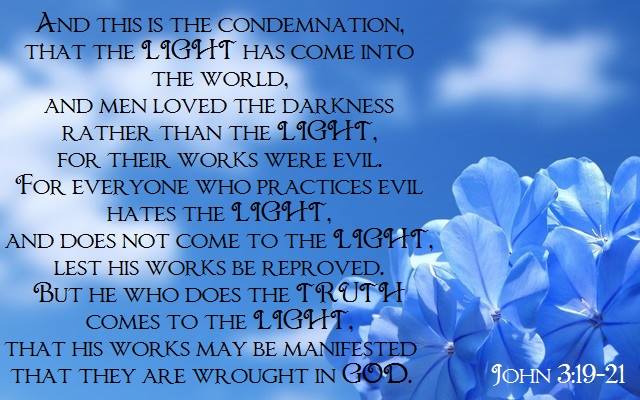
God’s way is that man will surrender in love and obedience to his Creator. God’s way is the “truth,” which is known as the light. The devil said the opposite of God’s truth, which is a lie. So, the way of man is the opposite of God’s way. There is no life apart from God. The devil’s lie to man is the darkness that man now lives within. Jesus said: John 3:19-20, “And this is the condemnation, that light is come into the world, and men loved darkness rather than light, because their deeds were evil. For every one that doeth evil hateth the light, neither cometh to the light, lest his deeds should be reproved.” Jesus is saying that truth has come into the world, but men love the lie and will not “receive” the truth. 

God’s condemnation of “thou shalt surely die” will fall upon those who love the lie because their deeds are evil. In other words, they go about seeking their own will or way and disregard God’s will. They sacrifice God for the benefit of self, which means they “hate” God. Thus they continually transgress God’s purposes and stand condemned under the original declaration. Another way to say this is that those who love “self” and the things of this world (the lusts of the flesh) will not live by (practice, adhere to, obey, submit to) the two great commandments. They place “self” before God and others. 

Jesus said concerning those who love darkness: John 8:44, “Ye are of your father the devil, and the lusts of your father ye will do. He was a murderer from the beginning, and abode not in the truth, because there is no truth in him. When he speaketh a lie, he speaketh of his own: for he is a liar, and the father of it.” 

Those who are in darkness “follow” the lusts of the flesh, which means they also “follow” the devil – he is their father. Those who seek their own will – the devil and his followers, do not abide in the truth. They walk in the darkness or lie.

These men were blind. Blindness represents walking in darkness. Those who walk in the darkness cannot see. However, these men were crying out to Christ for deliverance from their darkness – they wanted to see. 


Jesus represented the “light” or “truth,” which is the way out of the darkness. These men were reaching for the light, which is the truth. The crowd told them to hush and be quiet. The will of man is to stay in the darkness. Jesus said of those who seek self-will: “for thou savourest not the things that be of God, but the things that be of men (Mk 8:33)” – that is a great condemnation. Ephesians 2:3, “Among whom also we all had our conversation (lifestyle) in times past in the lusts of our flesh, fulfilling the desires of the flesh and of the mind; and were by nature the children of wrath, even as others.” 

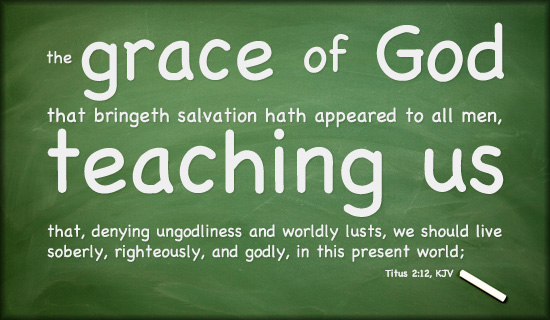
Man by and large (vast majority) is in rebellion to God through the seeking of the flesh (Mt 13:22, Mk 4:19, Lk 8:14, Rm 6:12, 13:14, Gal 5:16, 24, Js 1:14-15, 1 Tim 6:9, Ti 2:12, 1 Jn 2:15-17, 1 Pt 1:14, 2:11, 4:2, 2 Pt 1:4, Jude 1:18). This is a fact throughout God’s Word. One only has to consider the world before the flood (in Noah’s days) or Sodom and Gomorrah to understand this. Had these blind men listened to the will of man they would have remained “blind” to the truth of God and would have remained helpless in the darkness. 

Those who seek the flesh become blind to the truth of God. Those who seek the truth of God must become blind to the things of the flesh. There are none are so blind as those who will not see. Those who love the darkness (the lie) refuse to see the light (truth). Those who walk by the flesh will never want to deny it. These blind men caught a glimpse of the light and were not going to miss their opportunity to lay hold. They cried out in faith, going against the flesh and will of man. They were rejecting the darkness with its lies and bondage. 

The interesting thing in this account is that the blind men could see and the crowd were blind – a paradox. The crowd tried to prevent the blind men from meeting Jesus (the answer to their needs) and thus keep them in the darkness. Luke 11:35, “Take heed therefore that the light which is in thee be not darkness.” The crowd could see Jesus, but not their great personal need for Him. The blind men could not see Jesus, but realized their great personal need for Him.

The blind men wanted a complete “change” in their lives. They did not want to be without sight ever again. In other words they wanted to completely forsake their old life of blindness – never to be sought again (Lk 9:62, Gal 2:18). They cried out to Jesus for healing and “change” – deliverance from their present condition. Similarly, man has sinned against God and walks in darkness. We must cry out to God for deliverance (redemption) from this present darkness in order to come to His light (Jn 3:19-21). 


Jesus offers “light” which is the “truth” - that ye should shew forth the praises of him (Jesus) who hath called you out of darkness into his marvellous light (1 Pt 2:9). We must come out of the darkness which is Satan’s lie (says you can transgress God’s will and ye shall not surely die and you can walk in your will as a god, Gen 3:4-5). You must come out of the darkness or your old life of transgressions against God, which is sustained through seeking the lusts of the flesh. 

The power of darkness is through the lust of the flesh. You must be willing to totally forsake the old life for the new life Christ offers (Rm 6:6, Eph 4:22, Col 3:9). You must be “born again” as a new creature in Christ Jesus – the old is gone and all things are become new (Jn 3:3, 7, 2 Cor 5:17).

The blind men cried unto the Lord. Jesus responded: “What will ye that I shall do unto you?” They say unto him, Lord, that our eyes may be opened. These men wanted to forsake their blindness by gaining sight. Similarly we must cry out to God that our eyes (understanding) may be opened to God’s truth. We must forsake our darkness, which is found in the devil’s lie in order to obtain. 


The truth can only be received when the lie is first rejected. No lie is of the truth (1 Jn 2:21). Further the truth can only be grasped when one walks therein. Jesus was undeniably walking the truth for all to see. No one could accuse Christ of sin, for He perfectly obeyed God (Jn 8:46). Jesus says, “come, follow Me.” Jesus touched the blind men’s eyes: and immediately their eyes received sight, and they followed him.” When Christ lifts our blindness and gives understanding to His truth, we must “follow” Him. We receive sight (truth) and then follow. We walk as Jesus walked (1 Jn 2:6)! Colossians 2:6, “As ye have therefore received Christ Jesus the Lord, so walk ye in him.” 

You cannot relate to, receive or “know” the truth any other way. There are no casual observers in Christ’s kingdom – only active participants. Jesus said: John 10:27, “My sheep hear my voice, and I know them, and they follow me.” AND John 12:26, “If any man serve me, let him follow me; and where I am, there shall also my servant be: if any man serve me, him will my Father honour.” Christ leads and we just follow. Matthew 10:24, “The disciple is not above his master, nor the servant above his lord. It is enough for the disciple that he be as his master, and the servant as his lord…” 

How do we follow? Christ said it like this: Luke 9:23, “And he said to them all, If any man will come after me, let him deny himself, and take up his cross daily, and follow me (also Mt 16:24, Mk 8:34, 10:21).” We start by denying “self” to obey the commands of our Lord. We next take up our cross daily. This is the path to dying to the flesh. The things of “self” and the flesh must be nailed to the cross – every high thing in your life that exalteth itself above the knowledge of God (2 Cor 10:5). 

To walk that path of the cross spells doom to the flesh. This is a very narrow path of no return (Jn 7:14). Jesus took up His cross and gave Himself wholly to the complete will of God. We take up our crosses and give “self” completely to the will of Christ. Jesus further stated: Matthew 10:38, “And he that taketh not his cross, and followeth after me, is not worthy of me.” AND Luke 14:27, “And whosoever doth not bear his cross, and come after me, cannot be my disciple.” Jesus is saying that you must be like Him and conform to His image to enter the kingdom of God (Lk 6:40, Rm 8:28-29, 2 Cor 3:18, 4:10-11, Gal 3:27, Eph 4:13, 15, Col 1:20, 3:10, Heb 13:21). 

What is Jesus’ image? God hath in these last days spoken unto us by his Son: Hebrews 1:3, “Who being the brightness of his glory, and the express image of his person, and upholding all things by the word of his power, when he had by himself purged our sins, sat down on the right hand of the Majesty on high.” Jesus is the exact image of God. Christ said: “he that hath seen me hath seen the Father (Jn 14:9).” Jesus further stated: John 10:30, “I and my Father are one.” 

What was God’s original intent for man? Genesis 1:27, “So God created man in his own image, in the image of God created he him; male and female created he them.” Man fell from God’s image by following the devil in his lie. Man took on the image or nature of the devil and dwelt in darkness. We must now abide in Christ and be conformed to His image and be reconciled back to God. All of this is only accomplished by “following” Jesus in “the way” (Jn 14:6). 

To obey Christ, we must disobey “self” or the flesh. You must follow Christ and conform to His image and not tell Jesus to follow you and conform to your image. One must decrease that the other may increase (Jn 3:30). Who shall prevail in your life?

Jesus did the will of God and to enter into the kingdom of heaven we must also (Mt 7:21). Matthew 10:39, “He that findeth his life shall lose it: and he that loseth his life for my sake shall find it (also Mt 16:25, Mk 8:35, Lk 9:24, 17:33, Jn 12:24-25).” Finding your life is living for “self” – what you want, desire or lust after. Those who live for self ultimately lose their life to the second death. Losing your life is dying to “self” – dying to the things of the flesh and this world. Those who die to self now for the sake of obedience to Christ will gain eternal life – this God has promised (1 Jn 2:25, Ti 1:2, Js 1:12).

Jesus had compassion on them, and touched their eyes: and immediately their eyes received sight. Compassion is pity or commiseration toward others. Commiseration is sympathetic (corresponding feeling of regret) suffering of pain or sorrow for the afflictions or distresses of another. A further way to define compassion is a mixture of love and sorrow. This is to grieve or be sad at the loss of any good and sacrifice self for another’s benefit. 


Man has greatly dishonored God by disregarding the Lord’s way. Even so, God forbears the injuries of man (for now) and is longsuffering to us-ward, not willing that any should perish, but that all should come to repentance (2 Pt 3:9). The blind men reached out in repentance toward Jesus crying for mercy. The Lord has compassion on such in their suffering and distress. We forsake our way (the way of self), and return unto the LORD, and he will have mercy on us (Is 55:7). 

Repentance is doing an “about face” and going the other direction – toward God rather than away from Him. Psalms 86:5, “For thou, Lord, art good, and ready to forgive; and plenteous in mercy unto all them that call upon thee.” AND Psalms 86:15, “But thou, O Lord, art a God full of compassion, and gracious, longsuffering, and plenteous in mercy and truth (also Ps 103:8).” The blind men called upon Christ and He had compassion and mercy toward them. For with the LORD there is mercy, and with him is plenteous redemption (Ps 130:7). No one will approach unto God exalted in their flesh (prideful). The Lord will be found by those who deny the flesh and reach beyond it (meekness). 

Redemption is the act of saving one from sin (Mt 1:21, 1 Jn 3:5). Sin is iniquity and unrighteousness, which is transgressing the will of God. Jesus touches our eyes and gives us truth to the intent that we will “follow” Him. Jesus was “doing” the will of God, which is the foundation of truth. Jesus redeems us from sin by leading us in the truth such that we are no longer transgressing the will of God, but obeying and performing the will of God. Christ rescues or salvages us from the darkness of seeking our own will (and thus transgressing God’s will) and leads us into the light (truth) to perform God’s will. 

In other words, Jesus leads us to restoration to be what man was intended to be before the fall in Eden. Man must surrender in love and obedience to the absolute will of God – this is truth. Man must come out of the darkness or lie which has man obeying the lusts of his flesh – his own way (Pv 21:2). Jesus came to destroy the works of the devil, which is his great lie (1 Jn 3:8). Christ destroys Satan’s works by leading us out of the darkness (the lie) and into the light (truth). We must become blind to the flesh and things of man that we may see the truth of God.

Conclusion

Jesus made a way where there was no way – a very narrow way (Jn 7:14, 14:6). This way is traveled through self denial as you yield and obey the direction of another. The path is there, who will follow? What is the cost? Yes, we must first count the cost (Lk 14:28-33). Following on the narrow path will cost you your old life and a forsaking of all (Mt 19:21, Lk 14:33, 18:22, 2 Cor 5:15-17). 


The Lord is longsuffering and patient toward you and has plenty of forgiveness and mercy. To receive what the Lord graciously gives, you must forsake the darkness. You must die to self – your way. You must come out of the darkness and into the light. The blind men received Jesus’ truth and followed Him. This is God’s requirement for each of us. We must now reach for that cross and follow in that very narrow way. There are none so blind as those who will not see. May the Lord grant you the ability to see.